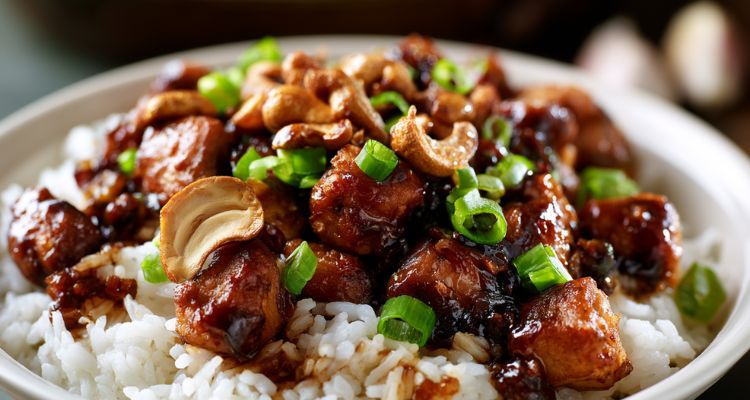
Martha Stewart cashew chicken is cornstarch-coated chicken breast seared in two fast batches, then tossed with hoisin sauce, rice vinegar, toasted cashews, and scallions, all done in about 30 minutes from cutting board to plate.
Martha Stewart’s cashew chicken lives on marthastewart.com under the straightforward title “Cashew Chicken,” positioned as a healthier homemade take on the Chinese takeout staple. The ingredient list is deliberately short: chicken, hoisin, rice vinegar, garlic, scallions, and cashews, with nothing deep-fried, so the dish stays clean and fast.
Cooking the chicken in two batches is the move that separates this from soggy takeout. Crowding the skillet drops the temperature and steams the cubes instead of browning them, and you end up with pale, soft chicken instead of the crispy golden edges that make this dish worth making at home.
Martha Stewart Cashew Chicken
Course: Chicken, DinnerCuisine: American, ChineseDifficulty: Easy4
servings20
minutes10
minutes400
kcal30
minutesCubed chicken breast gets a light cornstarch coat for crispy edges, sears hot and fast, and finishes in a glossy hoisin glaze with garlic, rice vinegar, and a handful of toasted cashews stirred in right at the end. Ready in 30 minutes flat.
Ingredients
1 1/2 lb (680g) boneless, skinless chicken breast, cut into 1 inch cubes
1 tablespoon cornstarch
3/4 teaspoon coarse salt
1/4 teaspoon ground pepper
2 tablespoons vegetable oil, such as safflower
6 cloves garlic, minced
8 scallions, white and green parts separated, each cut into 1 inch pieces
2 tablespoons rice vinegar
3 tablespoons hoisin sauce
1/4 cup (60ml) water
3/4 cup (4 oz / 115g) raw cashews, toasted
White rice, for serving (optional)
Directions
- Coat the chicken. Toss the cubed chicken with cornstarch in a medium bowl until evenly coated. Season with 3/4 teaspoon salt and 1/4 teaspoon pepper.
- Sear the first batch. Heat 1 tablespoon oil in a large nonstick skillet over medium-high heat. Add half the chicken and cook, tossing often, until browned on all sides, about 3 minutes. Transfer to a plate.
- Sear the second batch. Add the remaining 1 tablespoon oil to the skillet along with the rest of the chicken, the garlic, and the white parts of the scallions. Cook, tossing often, until browned, about 3 minutes.
- Build the sauce. Return the first batch of chicken to the skillet. Add the rice vinegar and cook until it evaporates, about 30 seconds. Pour in the hoisin sauce and 1/4 cup (60ml) water. Cook, tossing, until the chicken is cooked through and the sauce is glossy, about 1 minute.
- Finish and serve. Remove from heat. Stir in the scallion greens and toasted cashews. Serve immediately over white rice if desired.
Notes
- Toasting brings out the sweet, buttery flavor of the cashews. Spread them on a baking sheet and bake at 350F (180C) until golden and fragrant, about 10 minutes.
FAQs
Why cook the chicken in two separate batches?
A full 1 1/2 pounds of chicken in one load drops the pan temperature fast, and the cubes steam in their own moisture instead of searing. Two smaller batches keep the heat high enough for each piece to make contact with the hot surface and develop crispy edges.
The whole thing only adds about 3 extra minutes. That small cost buys you golden, caramelized chicken instead of pale, rubbery cubes sitting in a puddle of liquid. The browning also gives the hoisin glaze something textured to grip.
Why coat the chicken in cornstarch before cooking?
Cornstarch creates a thin, dry barrier on the surface of each cube that browns faster than bare chicken. That barrier gives the finished pieces a light crispness that holds up once the hoisin sauce goes in.
Without it, the chicken browns unevenly and the sauce slides right off. A single tablespoon is enough for the full batch, so the coating stays sheer and crispy rather than heavy or doughy like a deep-fry batter.
Can you use chicken thighs instead of breasts?
Thighs work, though the texture shifts. Dark meat stays juicier but does not crisp the same way under the cornstarch coat because the higher fat content softens the surface instead of letting it sear dry.
Cut thighs into the same 1 inch cubes and add about a minute to each batch since they release more moisture. For a recipe built around thighs from the start, her butter chicken uses their fat and tenderness in a cream sauce where softness is the point.
Why stir in the scallion greens off the heat?
Scallion greens wilt and turn army green in seconds over high heat, losing both color and bite. Adding them after the skillet leaves the burner keeps them bright, slightly crunchy, and fresh-tasting against the warm hoisin glaze.
The white parts go in early because they need heat to mellow their sharper flavor and release it into the sauce. Splitting whites and greens by timing is a standard stir-fry technique that pulls the most out of a single ingredient.
How long does cashew chicken keep in the fridge?
Cashew chicken holds up for about 2 days in a sealed container in the fridge. The cashews soften overnight and lose their crunch, so keep a handful of toasted extras to scatter over reheated portions.
Reheat in a hot skillet rather than the microwave so the chicken crisps again instead of steaming. For a lighter chicken dish that actually improves overnight, her Asian chicken salad is designed to be served cold from the fridge.