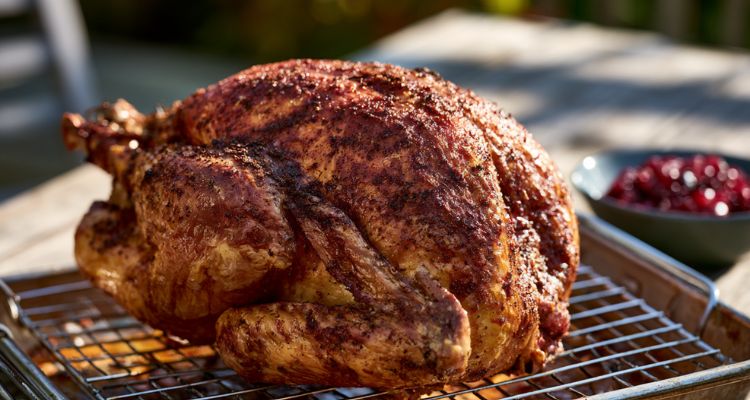
Martha Stewart’s deep-fried turkey is a 6.8 kg (15 lb) bird rubbed with ground bay leaves, thyme, oregano, and Creole seasoning. It fries in peanut oil at 182°C (360°F) for 45 minutes. The recipe comes from chef Rina Prentice and needs an overnight rub.
This recipe first appeared in Martha Stewart Living, November 1996 and still sits on her official site. Stewart says the bird comes out so rich it needs no gravy, which is unusual for a whole turkey. The Creole spice rub is Southern in origin, and Prentice also brought a Low Country rice dressing to pair with it.
The detail that separates this from a basic fry job is grinding the spices yourself. Stewart calls for whole bay leaves and whole peppercorns run through a spice grinder, not pre-ground jars. Freshly ground spices release more oil and stick better under the skin during the overnight rest.
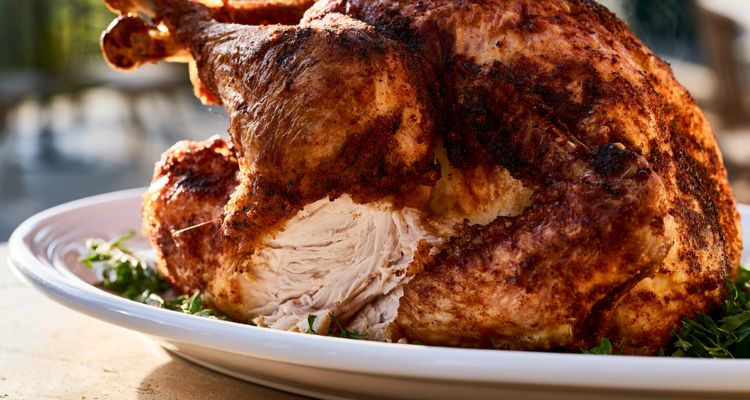
Martha Stewart Deep Fried Turkey
Course: Chicken, DinnerCuisine: BritishDifficulty: Easy12
servings30
minutes45
minutes475
kcal1
hour20
minutesA whole turkey rubbed with a Creole spice blend and deep-fried in peanut oil, from Martha Stewart Living (November 1996). Recipe by personal chef Rina Prentice. Must be cooked outdoors.
Ingredients
- For the spice rub:
25 medium whole bay leaves
3¼ teaspoons dried thyme
3¼ teaspoons dried oregano
1½ teaspoons whole black peppercorns
3 tablespoons Konriko or other hot Creole seasoning
2 teaspoons garlic powder
- For frying:
1 fresh turkey, 6.8 kg (15 lb)
15 litres (4 US gallons) peanut oil
Directions
- Wash the turkey inside and out under cold running water and pat dry. Grind the bay leaves finely in a spice grinder and transfer to a small bowl. Grind the thyme, oregano, and peppercorns separately, then add to the bowl. Mix in the Creole seasoning and garlic powder.
- Rub one-third of the spice mixture inside the cavity, one-third under the skin of the breast, and one-third over the outside of the turkey. Place in a roasting tin, cover, and refrigerate overnight or up to 24 hours.
- Bring the turkey to room temperature. Thread the neck flap securely to the bottom of the turkey with a wooden skewer. Fold the wing tips under. Truss the legs and tail together with steel or aluminium wire, forming a handle for lowering the bird into the oil.
- Heat the peanut oil in a 38-litre (10-gallon) pot with a liner basket over high heat until it reaches 182°C (360°F). Holding the turkey by the wire handle, lower it slowly into the oil. Maintain the temperature at 182°C (360°F) throughout.
- Fry until golden brown, about 45 minutes or 3 minutes per pound. Lift the turkey from the oil and transfer to a wire rack set over a roasting tin. Drain for 15 minutes before serving.
Notes
- Safety: This recipe must be cooked outdoors on flat ground, at least 3 metres (10 feet) from any structure. Never leave a deep fryer unattended. Keep children and pets well away from the hot oil.
FAQs
How much oil do I actually need for a deep-fried turkey?
Stewart calls for 15 litres (4 US gallons) for a 6.8 kg (15 lb) bird in a 38-litre pot. The oil level must cover the turkey completely but leave at least 10 cm of space below the rim. Too much oil overflows when the bird goes in, and too little leaves the top exposed.
To check without wasting oil, place the turkey in the empty pot and fill with water until it covers the bird by 2–3 cm. Mark that line, remove the turkey, dry the pot, and fill with oil to the mark. This displacement test prevents the most common cause of deep-fryer fires.
Can I reuse the peanut oil?
Yes, and it makes the cost more reasonable. Once the oil has cooled completely, strain it through muslin or a fine sieve to remove any food particles. Store in the original containers in a cool, dark place. Peanut oil can be reused two or three times before it starts to break down and smoke at lower temperatures.
You’ll know the oil is spent when it darkens significantly, smells stale, or starts smoking well below 182°C (360°F). Most people get a second turkey and sometimes a third from one batch. I wouldn’t push it beyond that because the flavour turns bitter.
What happens if I use a frozen or wet turkey?
This is the single biggest safety risk with deep-frying. Ice and water in contact with 182°C oil flash into steam instantly, which causes the oil to erupt and overflow. That overflow hits the burner flame and starts a fire. Every year, fire services report deep-fryer fires caused by partially frozen birds.
The turkey must be completely thawed and thoroughly dried, inside and out, before it goes near the oil. Pat the cavity dry with kitchen paper and check for ice crystals in the joints. Let it sit at room temperature for an hour before frying. Stewart’s recipe specifies a fresh turkey, not frozen, which avoids the problem entirely.
Why does Stewart use a wire handle instead of the basket?
The liner basket that comes with most turkey fryers works for lowering and lifting. Stewart’s wire handle gives you more control over the speed of the descent, which matters because lowering too fast causes a dangerous oil surge. The handle also makes it easier to lift the bird and check progress.
If you’re using the basket instead, lower it slowly over about 60 seconds. Either way, wear long heat-resistant gloves that cover your forearms. The oil spatters during the first 30 seconds as surface moisture hits the heat.
How do I know when the turkey is done?
Stewart’s rule is 3 minutes per pound, which gives 45 minutes for a 6.8 kg (15 lb) bird. But the real answer is internal temperature. Insert a thermometer into the thickest part of the thigh without touching bone. It should read 74°C (165°F) for safe consumption.
If you’re cooking your first deep-fried turkey, pull it at 45 minutes and check. The legs should move freely in their sockets and the skin should be a deep golden brown. Overcooked deep-fried turkey dries out fast because there’s no pan of juices to keep it moist, so don’t leave it in “just to be safe.”
What can I serve with a deep-fried turkey since it has no gravy?
Stewart says this turkey is rich enough to skip the gravy, and I agree. The Creole spice rub and the crispy skin carry the flavour on their own. Rina Prentice paired it with a Low Country rice dressing made with Carolina Gold rice, cornbread, Italian sausage, and roasted garlic. A cranberry relish works well to cut through the richness.
For sides that match the Southern flavour profile, try cornbread, collard greens, or a simple coleslaw. If you’re building a broader holiday spread, this turkey sits happily next to a roast with a different approach like the crown roast. And if you want potatoes, Jamie Oliver’s jacket potato method gives you crisp skins without competing with the turkey’s crunch. A green bean salad rounds things out with something fresh.