Members-only deals, Oct 6-7Try Prime free
Deals through Dec 1, delivered free with PrimeTry Prime free
Ina Garten's chocolate buttercream cake is an easy dessert she picked up from pastry chef Larry Hayden at Union Square Café. Buttermilk, sour cream, and brewed coffee keep every layer moist, so it holds up well for a dinner party or birthday celebration.
Cream the butter and sugars on high for a full five minutes before adding the eggs. That long creaming traps air into the batter, and it's what gives this cake its light, tender texture.
Source: The Barefoot Contessa Cookbook (1999)
What you need for this recipe
Fat Daddio's 9-inch round cake pans, set of 2
Two 8 inch rounds give you tall layers that bake in 25 to 30 minutes.
Buy on AmazonKitchenAid Artisan 5-quart stand mixer
Cream the butter and sugars on high for a full five minutes to trap air.
Buy on AmazonCheckered Chef cooling racks
Cool the layers ten minutes on a rack, then unmold and let them finish cooling.
Buy on AmazonIna's pantry Nielsen-Massey Madagascar Bourbon vanilla extract, 8 oz
Real vanilla, the kind Ina means when she writes 'pure vanilla extract'.
Buy on AmazonShipping adds up. Try Prime free for 30 days for fast, free delivery.
As an Amazon Associate I earn from qualifying purchases.
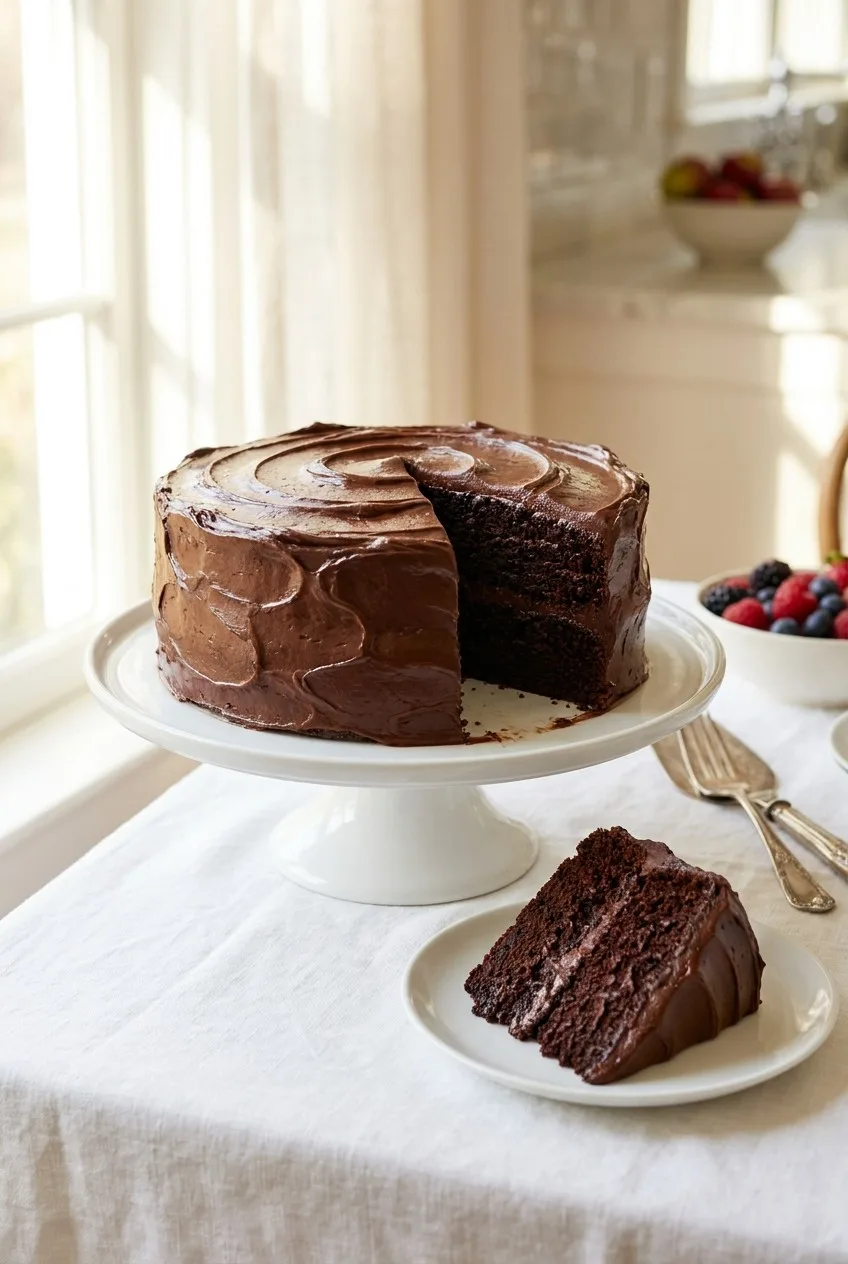
Ina Garten Chocolate Buttercream Cake
Course: DessertCuisine: AmericanDifficulty: Easy8
servings30
minutes30
minutes545
kcalTwo cocoa-rich layers baked in 8-inch rounds until set, cooled, stacked flat side up, and frosted with a generous coat of chocolate buttercream.
Ingredients
1 3/4 cups all-purpose flour
1 cup good cocoa powder
1 1/2 teaspoons baking soda
1/4 teaspoon salt
3/4 cup unsalted butter at room temperature
2/3 cup granulated sugar
2/3 cup light brown sugar, packed
2 extra-large eggs at room temperature
2 teaspoons pure vanilla extract
1 cup buttermilk at room temperature
1/2 cup sour cream at room temperature
2 tablespoons brewed coffee
Chocolate Buttercream (recipe follows)
Directions
- Prep the pans and dry ingredients: Preheat the oven to 350 degrees. Butter two 8-inch round cake pans. Line the bottoms with wax paper, butter the paper, and dust the pans with flour, knocking out any excess. In a medium bowl, sift together the flour, cocoa, baking soda, and salt.
- Cream the butter and mix the batter: In the bowl of an electric mixer fitted with a paddle attachment, cream the butter and sugars on high speed until light, approximately 5 minutes. Add the eggs and vanilla and mix well. Combine the buttermilk, sour cream, and coffee. On low speed, add the flour mixture and the buttermilk mixture alternately in thirds, beginning with the buttermilk mixture and ending with the flour mixture. Mix the batter only until blended.
- Bake the layers: Divide the batter between the two pans and smooth the tops with a spatula. Bake on the middle rack of the oven for 25 to 30 minutes, or until a toothpick comes out clean. Cool for 10 minutes on a rack, remove from the pans, and allow to finish cooling.
- Frost the cake: Place one cake on a serving plate, flat side up. Frost the top of that layer with buttercream. Place the second layer on top, also flat side up, and frost the top and sides.
Tools for this recipe
- Fat Daddio's 9-inch round cake pans, set of 2, KitchenAid Artisan 5-quart stand mixer, Checkered Chef cooling racks, Nielsen-Massey Madagascar Bourbon vanilla extract, 8 oz. As an Amazon Associate I earn from qualifying purchases.
Amazon Prime
Shopping for this recipe?
✓ Fast, free delivery✓ Prime-only deals✓ Cancel anytime
Start your 30-day free trialAs an Amazon Associate I earn from qualifying purchases.
Love this one? It is from Ina's book The Barefoot Contessa Cookbook.
FAQs
Can I use Dutch-process cocoa instead of natural cocoa?
Both types work in this recipe. Ina suggests Callebaut or Valrhôna, which are Dutch-process. The baking soda reacts with the buttermilk and sour cream for leavening, so either style will rise properly. Use whichever cocoa you like best.
How long does this cake keep?
Frosted and loosely covered, it stays fresh at room temperature for about two days. After that, refrigerate it for up to five days total. Bring slices back to room temperature before serving, because cold buttercream gets stiff and loses its creamy texture.
Can I bake the layers ahead of time?
Yes, the baked layers freeze well for up to three months. Wrap each one tightly in plastic, then in foil, and thaw overnight in the fridge before frosting. The buttercream can also be made a day ahead and stored in the fridge, then brought to room temperature and re-whipped until smooth.
Do I need a stand mixer for this cake?
A stand mixer with a paddle attachment gives the best results for creaming the butter and sugars. A hand mixer works too, but you may need to cream for a couple extra minutes to get enough air into the batter. A whisk alone will not do the job here.
What is the most common mistake with this cake?
Over-mixing the batter once you start adding the flour. Alternate the dry and wet ingredients on low speed, and stop as soon as everything comes together. Too much mixing activates the gluten and turns the cake tough and dense instead of tender.
This week on Amazon
Prime Big Deal Days run October 6 and 7, two days of deals for Prime members. The picks from this recipe we would check first: Fat Daddio's 9-inch round cake pans, set of 2, KitchenAid Artisan 5-quart stand mixer, Checkered Chef cooling racks.
See the dealsBlack Friday and Cyber Monday deals run through December 1. The picks from this recipe we would check first: Fat Daddio's 9-inch round cake pans, set of 2, KitchenAid Artisan 5-quart stand mixer, Checkered Chef cooling racks.
See the dealsIna's new cookbook Simply Ina comes out October 20. Pre-orders are open.
As an Amazon Associate I earn from qualifying purchases.