Members-only deals, Oct 6-7Try Prime free
Deals through Dec 1, delivered free with PrimeTry Prime free
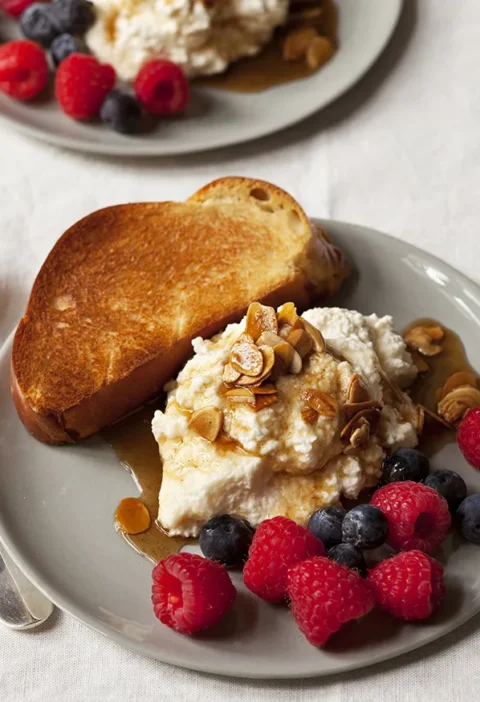
Ina Garten homemade ricotta takes 35 minutes and just four ingredients, whole milk, heavy cream, salt and white wine vinegar, to make 2 cups of thick, creamy fresh cheese. This make-ahead breakfast idea with few ingredients fits brunch, holiday mornings, Easter spreads and lazy Sunday toast.
Bring the milk and cream to a true rolling boil before the vinegar goes in, meaning one you can't stir down with a spoon. Skip that and the mixture won't curdle properly, so you end up with thin, grainy cheese.
Ina Garten's version in Make It Ahead (2014) uses cream along with the milk, which gives you a richer, silkier ricotta than milk alone. She also lets the curds drain only at room temperature, so you control how thick the cheese gets just by timing it.
Source: Make It Ahead (2014)
What you need for this recipe
Cuisinart fine mesh strainer set
It holds the cheesecloth and lets the whey drain away from the curds.
Buy on AmazonOlicity grade 90 cheesecloth
It catches the soft curds so the ricotta comes out smooth and creamy.
Buy on AmazonCuisinart MultiClad Pro 3-quart saucepan
A heavy non-reactive pot brings the milk and cream to a rolling boil without scorching.
Buy on AmazonIna's pantry Diamond Crystal kosher salt, 3 lb
The salt Ina measures with. Other brands are saltier, so her amounts fit this one.
Buy on AmazonShipping adds up. Try Prime free for 30 days for fast, free delivery.
As an Amazon Associate I earn from qualifying purchases.
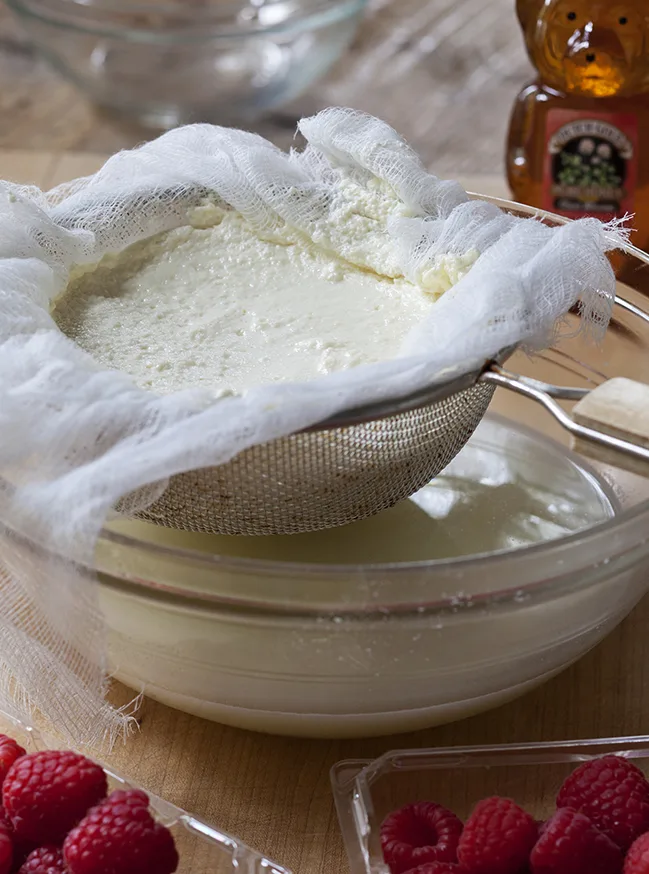
Ina Garten Homemade Ricotta
Course: BreakfastCuisine: American, ItalianDifficulty: Easy8
servings5
minutes10
minutes140
kcalWhole milk and cream curdle with a splash of vinegar, then drain through cheesecloth into soft, spoonable curds. The longer it sits in the sieve, the thicker and drier the ricotta turns out.
Ingredients
4 cups (1 quart) whole milk
2 cups (1 pint) heavy cream
1 teaspoon kosher salt
3 tablespoons good white wine vinegar
Directions
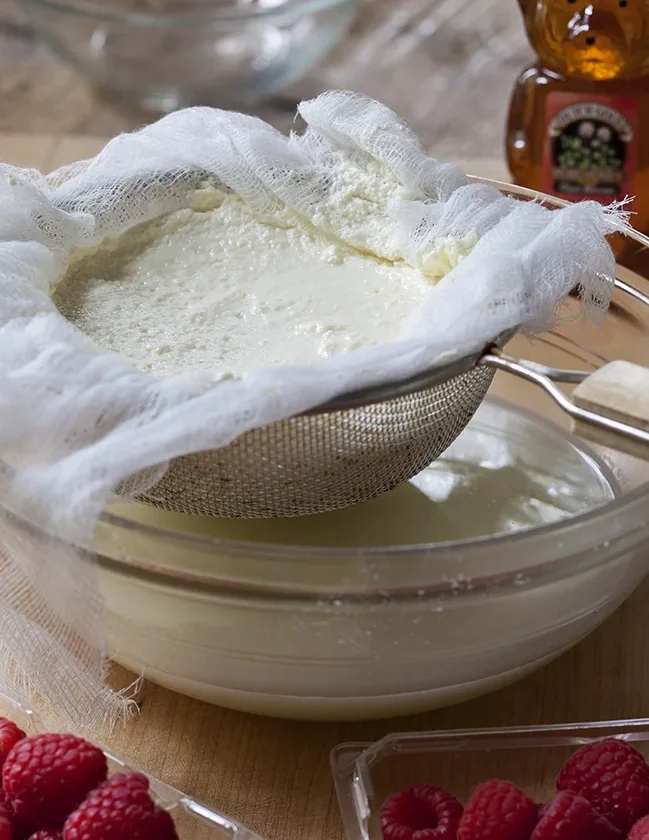
- Line the sieve: Set a medium-mesh sieve over a deep bowl, then line it with two double layers of cheesecloth. Dampen the cheesecloth so the curds don't cling to it.
- Heat the milk: Pour 4 cups whole milk and 2 cups heavy cream into a large stainless-steel or enameled pot and stir in 1 teaspoon kosher salt. Bring it to a full rolling boil over medium heat, stirring occasionally, which means you can't stir the bubbles down with a spoon.
- Add the vinegar: Turn off the heat and pour in 3 tablespoons good white wine vinegar. Let the pot stand for 1 minute until the mixture curdles.
- Drain the curds: Pour the mixture into the cheesecloth-lined sieve and let it drain into the bowl, discarding the liquid as it collects. Drain at room temperature for 20 to 25 minutes, since a longer drain gives you thicker ricotta.
- Chill or serve: Transfer the ricotta to another bowl, discarding the cheesecloth and any leftover liquid. Use it right away, or cover with plastic wrap and refrigerate.
Tools for this recipe
- Cuisinart fine mesh strainer set, Olicity grade 90 cheesecloth, Cuisinart MultiClad Pro 3-quart saucepan, Diamond Crystal kosher salt, 3 lb. As an Amazon Associate I earn from qualifying purchases.
Amazon Prime
Shopping for this recipe?
✓ Fast, free delivery✓ Prime-only deals✓ Cancel anytime
Start your 30-day free trialAs an Amazon Associate I earn from qualifying purchases.
Love this one? It is from Ina's book Make It Ahead.
FAQs
How thick should I let the ricotta drain?
Twenty minutes gives you a soft, creamy ricotta that spreads easily on toast. Closer to 25 minutes makes it thicker and drier, which works better for stuffing pasta or baking.
Can I use lemon juice instead of white wine vinegar?
Fresh lemon juice is a common swap and curdles the milk the same way, though it can leave a faint citrus note. White wine vinegar keeps the flavor cleaner and more neutral, which is why I stick with it.
How long does homemade ricotta keep in the fridge?
Cover it with plastic wrap or an airtight lid and keep it in the fridge. Fresh ricotta is at its best within a few days, so I make small batches and use it up quickly.
Do I need a stainless-steel or enameled pot?
Yes, a non-reactive pot matters here because the vinegar is acidic and can give aluminum or bare cast iron a metallic taste. A Le Creuset or any heavy stainless pot also heats the milk evenly, so it won't scorch.
What's the most common mistake with homemade ricotta?
Pulling the pot off the heat too early is the big one. If the milk hasn't reached a full rolling boil, the curds come out small and weak, and you lose a lot of yield to the liquid.
This week on Amazon
Prime Big Deal Days run October 6 and 7, two days of deals for Prime members. The picks from this recipe we would check first: Cuisinart fine mesh strainer set, Olicity grade 90 cheesecloth, Cuisinart MultiClad Pro 3-quart saucepan.
See the dealsBlack Friday and Cyber Monday deals run through December 1. The picks from this recipe we would check first: Cuisinart fine mesh strainer set, Olicity grade 90 cheesecloth, Cuisinart MultiClad Pro 3-quart saucepan.
See the dealsIna's new cookbook Simply Ina comes out October 20. Pre-orders are open.
As an Amazon Associate I earn from qualifying purchases.