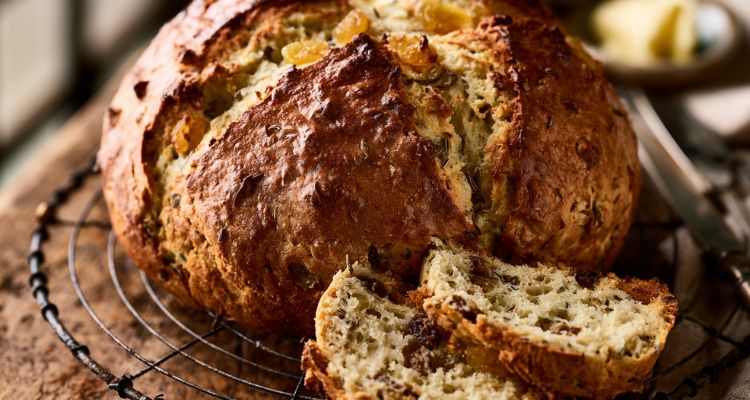
Martha Stewart Irish soda bread is a tender loaf with cold butter, caraway seeds, raisins, and buttermilk at about 595 calories per serving. And it takes about 1 hour 35 minutes total, since the 70-minute bake does most of the work after a quick mix.
Martha adds cold butter and an egg to this marthastewart.com recipe, which makes the loaf richer and moister than a traditional version. She then works in caraway seeds and raisins, so each slice has a warmth and sweetness that classic Irish soda bread skips.
Pay close attention to how little you handle the dough, since that separates a tender crumb from a tough, dense loaf. Once it barely holds together, stop mixing and shape gently, because overworking develops the gluten and kills the rise.
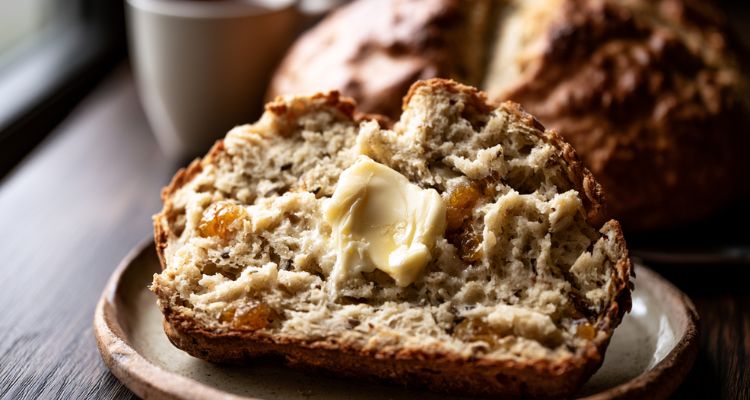
Martha Stewart Irish Soda Bread
Course: SidesCuisine: AmericanDifficulty: Easy6
servings20
minutes1
hour10
minutes595
kcal1
hour30
minutesA parchment-lined baking sheet holds this dome-shaped round while it turns golden at 350°F for about 70 minutes. Whisk flour with sugar, salt, baking powder, and caraway seeds, then cut cold butter in until the mix feels like coarse meal. Stir in raisins, fold buttermilk and egg through, then brush with egg wash and score a cross on top before baking.
Ingredients
- For the dough:
4 cups all-purpose flour
1/4 cup sugar
1 teaspoon salt
2 teaspoons baking powder
2 tablespoons caraway seeds
4 tablespoons unsalted butter, cold
1 1/2 scant cups buttermilk
1 large egg
1 teaspoon baking soda
- For the egg wash:
1 large egg yolk
1 tablespoon heavy cream
Directions
- Preheat the oven: Heat the oven to 350°F, then line a baking sheet with parchment paper and set it aside.
- Mix the dry ingredients: While the oven heats, whisk the flour, sugar, salt, baking powder, and caraway seeds together in a large bowl.
- Cut in the butter: Then use a pastry cutter or two knives to work the cold butter in until the mixture feels like coarse meal.
- Add the raisins: Once the butter is incorporated, stir in the raisins until they are evenly spread through the mixture.
- Make the wet mixture: In a small bowl, whisk the buttermilk, egg, and baking soda together until well combined.
- Combine wet and dry: Then pour the buttermilk mixture in all at once and stir with a fork until the dough just holds together.
- Shape the loaf: Once it resembles a rough biscuit dough, press it with your hands into a dome-shaped round about 8 inches across.
- Transfer to the sheet: Then lift the loaf onto the prepared baking sheet, keeping the dome shape intact.
- Brush with egg wash: In a small bowl, whisk the egg yolk and cream together, then brush the wash over the entire loaf.
- Score the top: Once the wash is on, use a sharp knife to cut a cross about half an inch deep into the top of the loaf.
- Bake the bread: Transfer to the oven and bake for about 70 minutes, rotating the sheet halfway through, until deep golden brown.
- Check for doneness: The bread is ready when a wooden skewer pushed into the center of the loaf comes out clean.
- Cool before slicing: Then move the bread to a wire rack and let it cool completely before cutting, since slicing too early traps steam inside.
FAQs
What can I use if I don’t have buttermilk?
The source page offers a quick substitute that works well here. Add four and a half teaspoons of white vinegar or lemon juice to a large measuring cup, then pour in enough milk to reach the one-and-a-half-cup mark.
Then stir the mixture once and let it sit for about five minutes until it curdles. The acid reacts with the baking soda the same way buttermilk does, so the bread still gets its proper lift and tangy flavor.
Can I leave out the raisins or swap them for something else?
Yes, the raisins are optional in this recipe. When they are included, the loaf is sometimes called a “Spotted Dog,” which is an old Irish nickname for fruit-studded soda bread.
And currants make a good swap if you want smaller bursts of sweetness throughout each slice. They bake the same way, so no other changes to the recipe are needed.
Why does the recipe call for cold butter instead of softened?
Cold butter creates small pockets of fat as it gets cut into the flour, which melt during baking and leave tiny air gaps behind. Those gaps are what give the crumb its tender, flaky texture instead of a dense one.
But if the butter is warm or soft, it blends into the flour as paste and those pockets never form. So keep the butter in the fridge until the moment you need it, and work quickly when cutting it in.
What goes well with this Irish soda bread?
Thick slices spread with good salted Irish butter are a natural starting point, since the bread’s warmth brings out the butter’s flavor. And for a full meal, it pairs well with a hearty stew, because the dense crumb soaks up the broth without falling apart.
But for a lighter option, a few slices go well alongside aged cheddar and salty ham. The bread’s slight sweetness from raisins and sugar balances the salt from the cheese and meat, so the combination works without any spread.
How should I store leftover Irish soda bread?
The loaf stays fresh at room temperature for up to five days in a sealed bag or airtight container. And always let it cool completely before sealing, because trapping steam inside makes the bread soggy.
For longer storage, wrap the cooled bread tightly in a double layer of plastic wrap and then a layer of foil. It freezes well for up to three months, and you can thaw slices at room temperature whenever you need them.