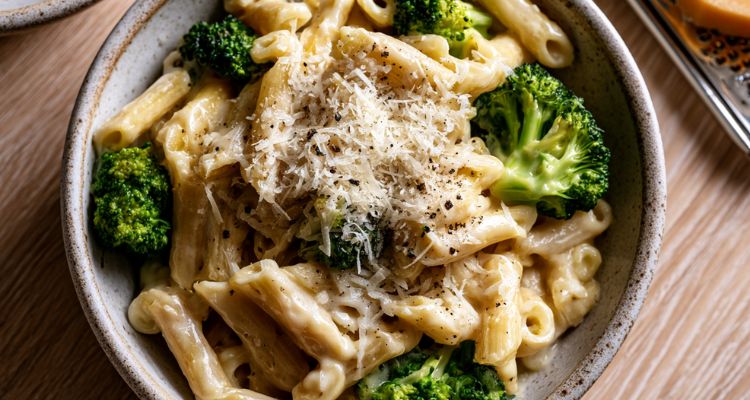
Martha Stewart’s cheaters mac and cheese is a one-pot dinner for two made with penne, broccoli, cream cheese, butter, and Parmesan. Ten minutes of prep and 20 minutes total gets it from boiling water to bowl.
The recipe is an exact match from marthastewart.com, published under this same playful name by her test kitchen. Every quantity and step below follows that original, right down to the optional black pepper and the extra Parmesan at the table.
Do not skip reserving that cup of pasta water, because the starch in it is the entire sauce structure. Simmered with cream cheese and butter, it turns glossy and clingy. Plain tap water gives you a thin, greasy puddle at the bottom of the bowl.

Martha Stewart Cheaters Mac And Cheese
Course: Pasta, DinnerCuisine: AmericanDifficulty: Easy2
servings10
minutes10
minutes430
kcal20
minutesA quick stovetop mac and cheese that sneaks a green vegetable into the same pot. The sauce comes together in the minutes it takes the pasta to drain.
Ingredients
4 oz (115g) short pasta, such as penne
Kosher salt and freshly ground black pepper (optional)
1½ cups (135g) fresh or frozen broccoli florets
2½ oz (70g) cream cheese (⅓ cup)
1 tablespoon (15g) unsalted butter
½ oz (15g) Parmigiano-Reggiano, finely grated (⅓ cup), plus more for serving
Directions
- Start the pasta. Cook the pasta in a pot of generously salted boiling water for 2 minutes less than the package says.
- Save the water. Scoop out 1 cup (240ml) of pasta water and cover it to keep warm.
- Add the broccoli. Drop the florets into the pot and keep boiling until the pasta is al dente and the broccoli is bright green, 1 to 2 minutes more. Drain.
- Build the sauce. Return the empty pot to medium heat. Add the cream cheese, butter, and ⅔ cup (160ml) of the reserved water, stirring until smooth and simmering.
- Bring it together. Take the pot off the heat and stir in the pasta, broccoli, and Parmigiano-Reggiano. Toss with more pasta water as needed until the sauce clings.
- Serve. Top each bowl with more Parmigiano and black pepper.
Notes
- Notes (from Martha’s original):
Switch up the broccoli: fresh or frozen cauliflower florets or peas work in its place.
Double the recipe: the original feeds two, but you can scale it up by doubling all the ingredients. The method stays the same.
FAQs
Why is it called cheaters mac and cheese?
It cheats the two steps that make classic mac and cheese a project: the flour-and-butter roux and the trip to the oven. Cream cheese already contains the stabilizers a roux would provide.
So the sauce stays smooth on the stovetop with no baking dish to wash. You trade the crusty baked top for speed, which is the whole point on a weeknight.
Can I add cheddar to this recipe?
Yes, but treat it gently. Stir a small handful of freshly grated cheddar in off the heat with the Parmesan, because direct heat makes cheddar seize into grainy clumps.
Skip pre-shredded bags, since their anti-caking starch coating resists melting. Fontina and Gruyère behave the same way if that’s what you have. If you’re after a bigger cheesy bake with a browned top, her baked pasta is the better project.
Why does the broccoli boil in the pasta pot?
Timing, mostly. Broccoli florets need only 1 to 2 minutes in boiling water, so adding them late gets both done at the same moment.
Frozen florets can go in straight from the bag with no thawing, and they barely lower the water temperature. Pull the pot off the moment the broccoli turns bright green, because 30 extra seconds takes it from crisp to army green and mushy.
Why stir in the Parmesan off the heat?
Parmigiano-Reggiano is an aged, low-moisture cheese, and direct heat makes its proteins tighten into stringy clumps. Residual warmth from the pasta and sauce melts it evenly instead.
Grate it fine on a rasp so it dissolves in seconds. The same rule holds at the table, where a fine shower over each bowl melts on contact instead of sitting in shreds.
Does cheaters mac and cheese reheat well?
Honestly, this one is best eaten fresh. The sauce stiffens into a paste overnight in the fridge, and the broccoli fades and softens with it.
Leftovers keep 2 days sealed in the fridge. Reheat gently in a pan with a splash of water or milk, and skip the freezer because the thawed sauce splits. If you want a make-ahead sauce that freezes well, her butternut squash pasta sauce holds for three months.