Martha Stewart’s scalloped potatoes are Yukon Gold slices simmered in milk, layered with Gruyère, and baked in that milk mixed with double cream. They bake at 160°C (325°F) for 80-90 minutes until golden and bubbly. The dish serves 8 and takes about 2 hours.
This recipe sits on Stewart’s official site as her go-to holiday side dish. The step that sets it apart is par-cooking the sliced potatoes in milk before they go in the oven. Most scalloped potato recipes layer raw slices and hope the oven does all the work, which often leaves hard centres.
That milk simmer is the technique that makes or breaks it. Three minutes in hot milk softens the potato slices just enough so they finish tender in the oven. The milk then gets combined with cream and poured back over the layers, so nothing is wasted.
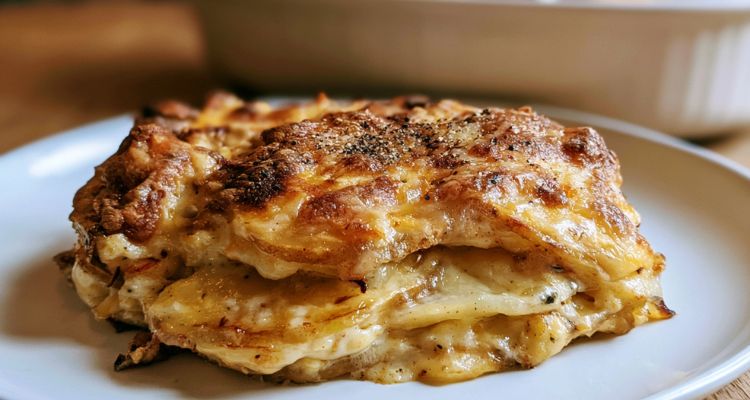
Martha Stewart Scalloped Potatoes
Course: SidesCuisine: AmericanDifficulty: Easy8
servings35
minutes1
hour25
minutes390
kcal2
hoursThin Yukon Gold slices par-cooked in milk, layered with Gruyère, then baked in milk and cream until golden and bubbly, from marthastewart.com. The milk simmer guarantees tender potatoes with no hard centres.
Ingredients
1.4 kg (3 lb) Yukon Gold potatoes, peeled and sliced paper-thin
600ml (2½ cups) whole milk
240ml (1 cup) double cream (heavy cream)
1 garlic clove, peeled
40g (3 tbsp) unsalted butter, softened
140g (5 oz) Gruyère cheese, grated
coarse salt and freshly ground black pepper
Directions
- Preheat the oven to 160°C/325°F/Gas 3 with a rack in the lower third.
- Put the sliced potatoes and milk in a large saucepan over high heat. Bring to the boil, then immediately reduce the heat to low. Cover and simmer until the potatoes are just tender, about 3 minutes.
- Set a colander over a large bowl and drain the potatoes, reserving the milk. Stir the double cream into the reserved milk.
- Rub a 2.5-litre (2½-quart) oval baking dish with the garlic clove, then with 1 tablespoon of the butter.
- Layer the potato slices in the dish, sprinkling Gruyère and seasoning with salt and pepper between each layer. Dot the top with the remaining 2 tablespoons of butter. Pour the milk and cream mixture over the potatoes.
- Bake until the cheese is deep golden brown and the liquid has reduced and thickened, 80-90 minutes. Rest for 5-10 minutes before serving.
Notes
- Use Yukon Gold potatoes, not floury varieties like Maris Piper or King Edward. Yukon Golds hold their shape during baking and give a cleaner texture.
- A mandoline gives the most even slices. If using a knife, aim for about 2 mm thick.
- Season each layer of potatoes individually rather than just the top. This ensures every bite is properly seasoned.
- You can slice and simmer the potatoes up to 1 hour ahead. Leave them in the covered saucepan until you’re ready to assemble.
- Calories: Potatoes 1,360g = 1,047 kcal. Milk 600ml = 366 kcal. Double cream 240ml = 816 kcal. Butter 42g = 301 kcal. Gruyère 140g = 578 kcal. Garlic negligible. Total: 3,108 kcal / 8 servings = 389, rounded to 390.
FAQs
Why does Stewart simmer the potatoes in milk first?
Raw potato slices take a long time to soften in the oven, and thick or uneven slices may never cook through. The 3-minute milk simmer gives them a head start so they finish perfectly tender during baking. It’s a small extra step that prevents the problem of biting into a hard centre.
The simmer also flavours the milk with starch from the potatoes, which helps the sauce thicken naturally as it bakes. That same milk gets combined with cream and poured back over the layers. It works as both a cooking liquid and the base of the sauce.
Why Yukon Gold potatoes specifically?
Stewart says Yukon Golds hold their shape during the long bake, unlike starchier varieties that break down into mush. They have a naturally buttery flavour and a waxy-firm texture that slices cleanly and stays intact in layers.
In the UK, Charlotte or Desiree potatoes are the closest match. Avoid floury types like Maris Piper or King Edward because they’ll dissolve into the cream and give you a thick paste instead of distinct layers. If you can find Yukon Golds at a specialist greengrocer, they’re worth seeking out.
Can I use a different cheese?
Stewart uses Gruyère for its nutty, earthy flavour and clean melt. She suggests Emmentaler or Comté as alternatives since they’re both Alpine-style cheeses that behave similarly. For a milder flavour, white cheddar works too.
Avoid pre-grated cheese from a bag because it’s coated in anti-caking starch that stops it melting smoothly. Grate a block yourself on the coarse side of a box grater. I find Comté gives the richest flavour of the alternatives, while cheddar makes the dish taste more British.
How do I store and reheat leftovers?
Stewart says leftovers keep in the fridge for up to four days in a covered container. To reheat, cover with foil and bake at 180°C (350°F) until hot through, about 30 minutes. The sauce thickens further on reheating, so the texture changes slightly but it still tastes good.
Don’t microwave these if you can avoid it. The edges dry out while the centre stays cold, and the cheese goes rubbery. The oven method heats everything evenly and keeps the top golden. If you’re reheating a single portion, a covered frying pan on low heat works better than the microwave.
Can I add extra ingredients to this recipe?
Stewart’s version is deliberately simple: potatoes, cheese, milk, cream, butter, garlic. That’s the classic approach. If you want to add something, thin slices of onion between the potato layers are the most traditional addition. Thyme or a bay leaf in the simmering milk adds a subtle herbal note.
Avoid heavy additions like bacon or thick sauces that compete with the clean flavour of the Gruyère and cream. This dish works best as a rich side alongside a crown roast or a simple steak. The potatoes do the heavy lifting on the plate.
What should I serve this with?
Stewart suggests ham, lamb, beef tenderloin, or pork Wellington. The potatoes are rich, so they pair best with simply cooked meat that doesn’t have its own heavy sauce. A roast chicken or grilled salmon also works well.
For vegetables, something green and sharp cuts through the cream. A green bean salad with a citrus dressing is a good contrast. Steamed tenderstem broccoli or a simple watercress salad both do the same job without adding more richness to the plate.