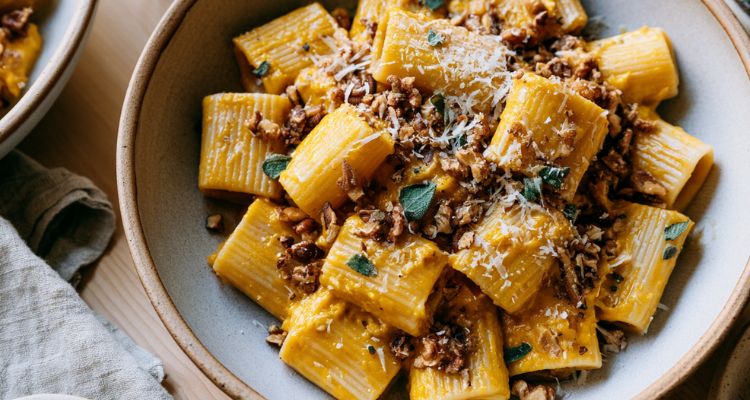
Martha Stewart’s butternut squash pasta sauce blends roasted squash and garlic with half-and-half into a silky sauce for any pasta shape. It needs just six pantry ingredients and one hour from whole squash to sauced dinner for eight.
The recipe is an exact match from marthastewart.com, where her team published it with step-by-step photos, a freezing guide, and her own serving ideas. Everything below, from the 40-minute roast to the walnut topping, follows that published version without a single change.
Roasting is the whole recipe here, so resist any shortcut like boiling or steaming the squash. Dry oven heat browns the edges and concentrates the sugars. Boiled squash turns waterlogged and gives you a pale, flat sauce that even Parmesan cannot rescue.

Martha Stewart Butternut Squash Pasta Sauce
Course: Pasta, DinnerCuisine: AmericanDifficulty: Easy4
servings20
minutes40
minutes95
kcalA roasted butternut squash sauce that tastes far richer than its short ingredient list suggests. Five garlic cloves go soft and sweet in the oven, then melt straight into the puree.
Ingredients
1 medium butternut squash (about 1½ lb / 680g)
1 tablespoon (15ml) olive oil
½ teaspoon dried rubbed sage
Coarse salt and ground pepper
5 cloves garlic, peel on
1 cup (240ml) half-and-half
Pasta (such as cheese ravioli or any short pasta), for serving
Directions
- Prep the squash. Preheat oven to 375F (190C). Trim the ends, cut the neck from the bulb, and peel both pieces with a vegetable peeler.
- Cut into chunks. Halve each piece lengthwise and scoop out the seeds. Cut the squash into 2-inch (5cm) chunks and spread on a rimmed baking sheet.
- Season and add garlic. Toss the chunks with the oil and sage, then season generously with salt and pepper. Scatter the unpeeled garlic cloves around the squash.
- Roast. Roast until very tender, about 40 minutes, tossing once halfway through. Peel the garlic and discard the skins.
- Puree. Move the squash and garlic to a food processor and puree. With the motor running, pour in the half-and-half and process until smooth.
- Thin the sauce. Add 1 to 2 cups (240 to 480ml) water and keep processing until smooth, adding more if it stays too thick. Season again generously with salt.
- Sauce the pasta. Cook pasta per the package and reserve 1 cup (240ml) pasta water before draining. Toss pasta with the sauce, loosen with pasta water if needed, and serve with toppings.
Notes
- Notes (from Martha’s original):
Best pasta matches: ridged or twisted short shapes like penne rigate, cavatappi, farfalle, or fusilli, plus cheese or meat ravioli. Skinny long pasta like spaghetti gives you a higher sauce-to-pasta ratio.
Topping swaps: a dollop of fresh ricotta with hot pepper flakes, crumbled cooked bacon, or toasted almonds in place of walnuts.
Freezing: cool the sauce fully, then pack into airtight containers leaving 1 inch of headspace. Freeze up to 3 months. To reheat, run the container under hot tap water to release the block, then warm covered over medium-low, thinning with water as needed.
Make it dinner with a salad or roasted vegetables, or add protein with sautéed chicken cutlets, pork cutlets, or crumbled Italian sausage.
FAQs
Why does the garlic roast with its peel on?
The peel works as a jacket that shields each clove from 40 minutes of direct oven heat. Naked cloves would scorch long before the squash turns tender, and burnt garlic makes the whole sauce bitter.
Inside the skin, the cloves steam in their own moisture and mellow completely. They slip right out after roasting and disappear into the puree with none of raw garlic’s sharp bite.
Can I use precut butternut squash instead?
Yes, and Martha’s team says so directly on the recipe page. They roast a whole squash because it costs less per pound, not because precut cubes perform worse.
Grab about 1½ pounds and check them a little early, since store-cut cubes are often smaller and can turn tender before the 40-minute mark. You want them soft enough to mash against the sheet.
Can I swap the half-and-half for milk or cream?
Both work, with different trade-offs. Whole milk makes a lighter, thinner sauce that needs less water, while heavy cream makes it richer and noticeably thicker.
For dairy-free cooking, full-fat coconut milk blends in smoothly but layers its own flavor over the squash. Whatever you pour in, add it with the motor running so the sauce stays silky instead of splitting.
Why save pasta water instead of plain water?
Pasta water carries dissolved starch, so it loosens the sauce while helping it cling to every ridge. Plain water thins the sauce but also dulls it and makes it slide off the noodles.
The starch matters more here than in a cheese-bound dish like her baked pasta, because this sauce has no melted mozzarella holding it in place. It is also salted, so taste before adding more.
How long does the sauce keep in the fridge?
Four days in an airtight container, and it holds up well because it is mostly vegetable rather than dairy. Expect it to thicken as the squash sets, sometimes to a spoonable paste.
Warm it gently and loosen it back to pourable. It comes back closer to fresh than cream sauces do, more like her scalloped potatoes than an Alfredo that splits on the second day.