Martha Stewart’s hard-boiled eggs use an off-heat method: cover with cold water and bring to the boil. Remove from the heat, cover, and let sit for 12 minutes. It takes 15 minutes total and works for one egg or a full dozen.
This recipe comes from Stewart’s official site, where she calls it a “one-ingredient wonder.” Her method is gentler than keeping eggs at a rolling boil. Cooking off the heat means the whites stay tender and the green ring around the yolk never forms.
The detail that trips people up is starting with cold eggs straight from the fridge. Stewart says to let them sit at room temperature for 30 minutes first. Cold eggs crack when they hit hot water, and the sudden temperature change toughens the whites.
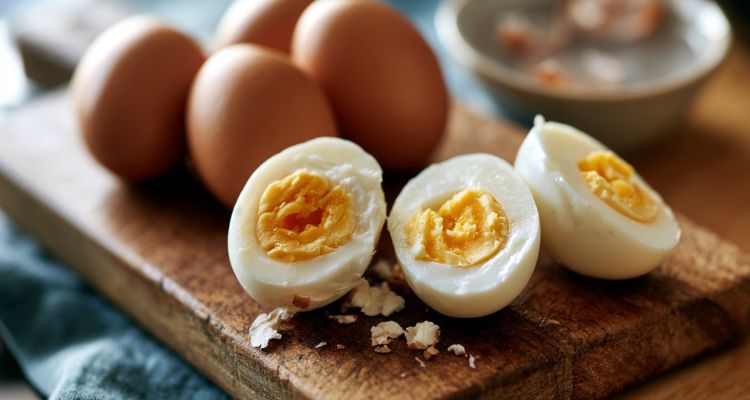
Martha Stewart Hard Boiled Eggs
Course: SidesCuisine: AmericanDifficulty: Easy12
servings5
minutes10
minutes78
kcal15
minutesA gentle off-heat method that produces tender whites and fully set golden yolks with no green ring, from marthastewart.com. Works for any number of eggs up to a dozen.
Ingredients
12 large eggs, at room temperature
Directions
- Place the eggs in a large saucepan and cover with cold water by 2.5 cm (1 in). Use a pan large enough to hold the eggs in a single layer without crowding.
- Bring the water slowly to the boil over medium heat. As soon as it reaches a full boil, cover the pan and remove from the heat. Let the eggs sit in the hot water for 12 minutes.
- Transfer the eggs to a colander and run under cold water to stop the cooking.
- To peel, tap the top and bottom of each egg on a board. Roll gently under your palm to crack the shell all over. Peel under cold running water, starting at the large end.
Notes
- Use eggs you already have in the fridge, not fresh ones. Older eggs peel more easily.
- Let eggs reach room temperature (about 30 minutes out of the fridge) before cooking. This keeps the whites tender and makes peeling easier.
- For extra-large or medium eggs, increase or reduce the standing time slightly.
- The off-heat method prevents the green ring around the yolk caused by overcooking.
FAQs
Why does Stewart cook eggs off the heat instead of boiling them?
Boiling eggs in rolling water for 10-12 minutes is harsh. The constant high heat makes the whites rubbery and often cracks the shells. Stewart’s method brings the water to the boil just once, then lets residual heat do the rest. The eggs cook more slowly and evenly.
The other benefit is avoiding the green ring on the yolk. That ring forms when sulphur and iron compounds react at high temperatures. By keeping the eggs in hot but not boiling water, the temperature stays low enough to set the yolk without triggering that reaction.
How do I get soft-boiled or medium eggs with this method?
Use the same technique but change the standing time. For soft-boiled eggs with a runny yolk, let them sit in the hot water for 4-5 minutes. For medium eggs with a jammy centre, 6-7 minutes does it.
The rest of the method stays exactly the same: cold water start, bring to the boil, cover, remove from heat. The only variable is how long you leave them sitting. I set a timer the moment the lid goes on because even one extra minute changes the texture noticeably.
Why does Stewart recommend older eggs instead of fresh?
Fresh eggs have a lower pH, which makes the membrane cling tightly to the white. As eggs age, the pH rises and the membrane loosens, so the shell peels off in larger pieces without tearing the surface. Eggs that have been in your fridge for a week or so are ideal.
This is the opposite of most cooking advice where fresher is better. For hard-boiled eggs specifically, the slightly older ones save you from the frustration of picking shell fragments off piece by piece.
How long do hard-boiled eggs keep in the fridge?
Stewart says they last up to one week in the fridge stored in an airtight container. Let them cool completely before storing. She also recommends peeling them before refrigerating because eggs are easier to peel when they’re freshly cooked than after they’ve been chilled.
Hard-boiled eggs should not be frozen because the whites turn rubbery and watery when thawed. If you’ve left cooked eggs out at room temperature for more than two hours, discard them. That two-hour rule applies to most cooked foods, not just eggs.
Can I make hard-boiled eggs in an Instant Pot?
Yes. Stewart’s site gives a method: place the eggs on the steamer rack with 2.5 cm (1 in) of water. Cook for 5 minutes at high pressure, then let the pressure release naturally for 5 minutes. Transfer immediately to an ice bath for 5 minutes.
The Instant Pot method produces eggs that peel very easily because the steam loosens the membrane. I use it when I’m cooking a full dozen. For just two or three eggs, the saucepan method is faster because the Instant Pot takes time to build and release pressure.
How do I use hard-boiled eggs?
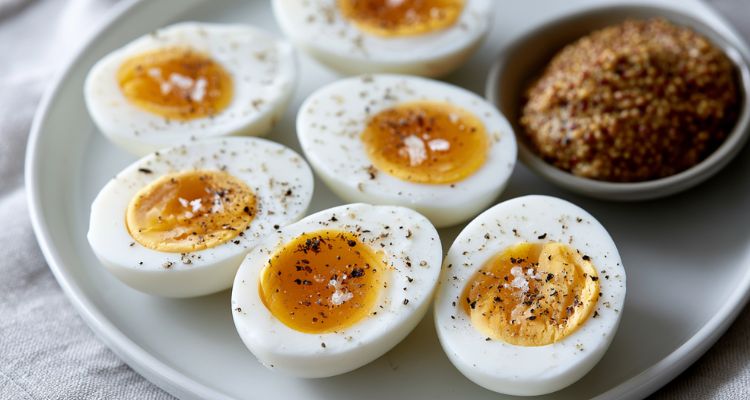
The simplest way is halved with salt, pepper, and a dab of mustard. Stewart also suggests everything-bagel seasoning, smoked salt, or a drizzle of olive oil with fresh herbs. Hard-boiled eggs are the base for devilled eggs and egg salad.
They’re also a useful make-ahead protein. Cook a dozen on Sunday and keep them in the fridge for the week. Add them to salads like Jamie Oliver’s green bean salad or slice them over a tomato and feta salad. For something completely different from Stewart, the banana bread uses eggs in a different way entirely.