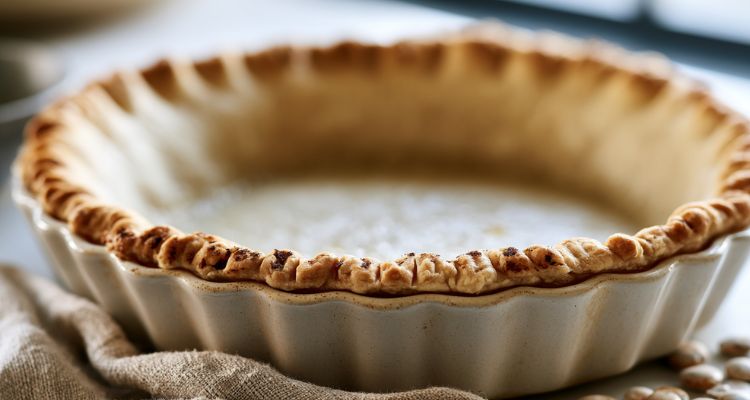
Martha Stewart’s pie crust is an all-butter pâte brisée made with plain flour, salt, a touch of sugar, and ice-cold water. It makes two 25 cm (10 in) crusts and is mixed entirely by hand. The dough chills for at least an hour before rolling.
This recipe sits on Stewart’s official site as her go-to pastry for pies and tarts. She uses only butter, no shortening or lard, because it gives the best flavour and flakiest layers. She also skips vinegar and vodka, preferring proper technique over added ingredients.
The rule that matters most is keeping everything cold. Cold butter creates pockets in the dough that release steam during baking, which is what makes the crust flaky. If the butter melts into the flour before the crust hits the oven, you get a dense, tough shell instead.
Martha Stewart Pie Crust
Course: SidesCuisine: AmericanDifficulty: Easy12
servings15
minutes175
kcal1
hour20
minutesAn all-butter hand-mixed pie dough from marthastewart.com. This classic pâte brisée works for double-crust pies, single shells, tarts, and galettes. Makes enough for two crusts.
Ingredients
225g (1 cup/2 sticks) unsalted butter, chilled, plus extra for the pie plate
315g (2½ cups) plain flour (all-purpose), plus extra for rolling
1 teaspoon salt
1 teaspoon sugar
120ml (½ cup) ice-cold water
Directions
- Cut each stick of butter into 8 pieces and refrigerate until needed.
- Place the flour, salt, and sugar in a large bowl and mix to combine.
- Add the chilled butter. Using a pastry blender, work the butter into the flour until the mixture resembles coarse meal with pea-sized pieces of butter still visible.
- Drizzle 2 tablespoons of ice water over the mixture and blend. Repeat with another 2 tablespoons. Squeeze a handful of dough: if it holds together, stop adding water. If it crumbles, add more water 1 tablespoon at a time. You may need as little as 60ml (¼ cup).
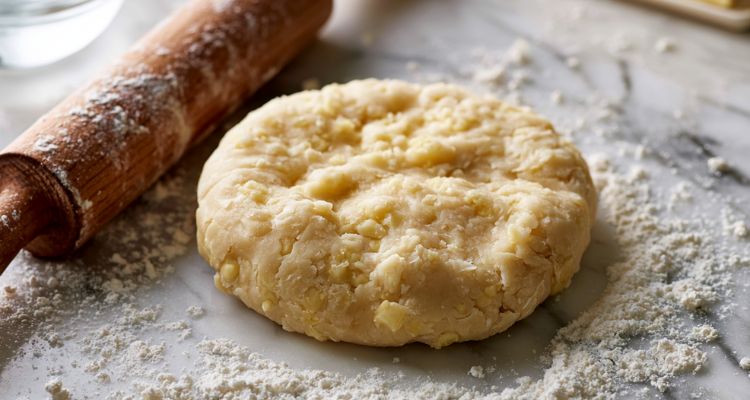
- Turn the dough out onto a clean surface. Divide into two equal pieces and place each on a sheet of cling film.
- Flatten each piece into a disc, wrap tightly, and refrigerate for at least 1 hour.
- Dust a clean, dry surface lightly with flour. Place one disc in the centre and dust the dough and rolling pin. Roll from the centre outward, giving the disc a quarter turn after each pass. Continue until the dough is about 3 mm (⅛ in) thick.
- Lightly butter the pie plate. Roll the dough around the pin, lift, and unroll over the plate. Pat gently into place. Trim the overhang to 2.5 cm (1 in) with a knife or scissors, then fold under to reinforce the edge.
Notes
- Food processor variation: Pulse the flour, salt, and sugar to combine. Add the chilled butter pieces and pulse for 8-10 seconds until pea-sized. With the machine running, add 60-120ml (¼-½ cup) ice water through the feed tube until the dough just comes together.
- Keep butter and water as cold as possible throughout. If the dough feels warm or sticky at any point, return it to the fridge for a few minutes.
- Stop mixing as soon as most of the flour is incorporated. Overworking develops gluten and makes the crust tough rather than flaky.
- Use as little flour as possible when rolling. Extra flour dries out the dough and toughens it.
- To blind bake, line the pastry shell with greaseproof paper, fill with baking beans or dried pulses, and bake until the edges begin to brown and the base feels dry. Remove the paper and weights, then bake until lightly golden all over. Cool before filling.
FAQs
Why does Stewart use all butter and no shortening?
Butter tastes better and creates flakier layers than shortening or lard. When cold butter hits a hot oven, it melts and releases steam, which puffs the dough into thin, crisp sheets. Shortening melts differently and doesn’t produce the same effect.
Stewart acknowledges that shortening is easier to work with and holds decorative edges better. But she priorities flavour and texture over convenience. If you’re new to pastry making, keep the butter cold and work quickly, and you’ll get the same results.
What is blind baking and when do I need it?
Blind baking means pre-cooking the crust before adding the filling. You need it when the filling cooks faster than the pastry, or when the filling isn’t cooked at all. Chocolate ganache tarts and fresh fruit custard pies both need a pre-baked shell.
Line the pastry with greaseproof paper and fill with ceramic baking beans or dried pulses. Bake until the edges start to colour and the base feels dry to the touch. Remove the weights, then bake a few more minutes until golden. This step prevents the soggy bottom that ruins otherwise good pies.
Why doesn’t Stewart add vinegar or vodka to her dough?
Some bakers add vinegar or vodka because they believe it limits gluten development, making the crust more tender. Stewart says this idea has been disproved. She prefers to rely on proper technique: cold butter, minimal handling, and enough chilling time.
Her view is that classic French ingredients and careful method produce a better result than workarounds. I agree. If you keep the butter cold and don’t overwork the dough, you don’t need anything beyond flour, butter, salt, sugar, and water.
How do I know when I’ve added enough water?
Stewart’s test is simple: squeeze a handful of dough. If it holds its shape without crumbling, stop adding water. If it falls apart, add another tablespoon and test again. You might use as little as 60ml (¼ cup) or the full 120ml (½ cup) depending on your flour and humidity.
Too much water makes the dough sticky and the baked crust tough. Too little leaves it dry and crumbly so it won’t roll out. I add water 1 tablespoon at a time after the first 60ml and check after each addition.
What is pâte brisée?
Pâte brisée is French for “broken pastry.” It describes a dough where cold butter is cut into flour until the mixture breaks into coarse, uneven pieces. Stewart’s pie crust is a classic pâte brisée. The name comes from the technique, not a specific recipe.
It’s the foundation pastry in French baking, used for quiches, tarts, and pies. If you’ve made this dough, you’ve made pâte brisée. For a different kind of baking project from Stewart, the banana bread uses a creaming method instead, which produces a completely different texture.
Can I freeze pie dough?
Yes. Wrap the discs tightly in cling film and place in a freezer bag. The dough keeps for up to three months in the freezer. Thaw overnight in the fridge before rolling. Don’t thaw at room temperature because the outside softens while the centre stays frozen.
You can also freeze a rolled and shaped crust in its pie plate. Wrap the whole thing in cling film and freeze. Fill and bake directly from frozen, adding 5-10 extra minutes to the bake time. This is useful if you want to prep crusts for holiday pies well in advance. A hard-boiled egg salad in a blind-baked tart shell is another way to use these crusts beyond sweet pies.