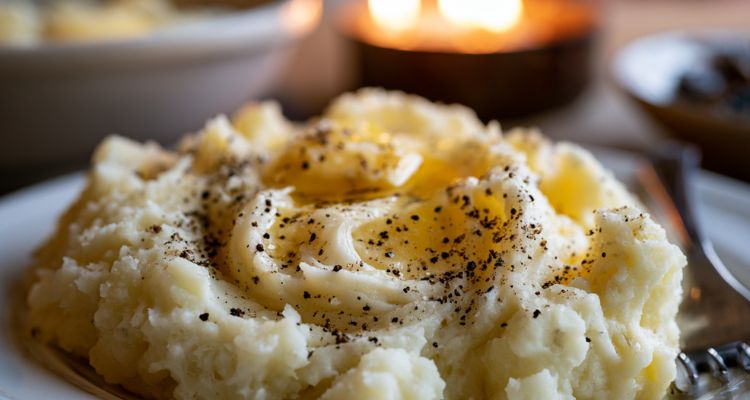
Martha Stewart’s mashed potatoes use russet or Yukon Gold potatoes boiled in salted water, then mashed with warmed milk, butter, and nutmeg. The recipe takes about 35 minutes and serves 6 as a side dish. Stewart gives two methods: a potato ricer for a fine texture, or a stand mixer for speed.
This recipe sits on Stewart’s official site as her go-to mashed potatoes. The step most people skip is drying the potatoes after draining: back in the hot pan for a minute until a starchy film forms. That drives off excess moisture so the butter and milk flavour comes through.
The other detail that matters is warming the milk and butter before adding them. Cold liquid shocks hot potatoes and makes the mash heavy. Warm milk blends in smoothly because it’s at the same temperature as the potatoes.
Martha Stewart Mashed Potatoes
Course: SidesCuisine: AmericanDifficulty: Easy6
servings15
minutes20
minutes210
kcal35
minutesFluffy mashed potatoes with warmed milk, butter, and nutmeg from marthastewart.com. Two methods given: potato ricer for fine texture, stand mixer for ease. The drying step after boiling is what makes these light.
Ingredients
900g (2 lb) russet or Yukon Gold potatoes, peeled and cut into 4 cm (1½ in) pieces
1 tablespoon salt, plus more to taste
240ml (1 cup) whole milk or double cream (heavy cream)
55g (4 tbsp) unsalted butter
¼ teaspoon freshly ground black pepper
¼ teaspoon freshly grated nutmeg
Directions
- Place the potatoes in a medium saucepan and cover with cold water. Add 1 tablespoon salt and bring to a simmer. Cook at a low simmer until a knife slips in and out easily.
- Drain in a colander. Return the potatoes to the hot pan over low heat for 1 minute, stirring gently. They’re ready when a thin film forms on the base of the pan.
- Warm the milk in a small pan over medium heat. Add the butter and stir until melted.
- Ricer method: Press the hot potatoes through a ricer into a heatproof bowl set over a pan of simmering water. Stir with a wooden spoon for 1 minute until smooth. Whisk in the butter, then drizzle in the hot milk, whisking continuously. Season with pepper, nutmeg, and salt to taste.
- Mixer method: Transfer the hot potatoes to a stand mixer with the paddle attachment. Mix on medium-low for about 1 minute until most lumps disappear. Add the butter and mix until blended. On low speed, pour in the hot milk in a slow stream. Add pepper, nutmeg, and salt to taste.
Notes
- Variations:
For stiffer mash, reduce the milk to 180ml (¾ cup).
For richer mash, add an extra 30g (2 tbsp) butter.
For tangy mash, swap some or all of the milk for sour cream, cream cheese, or buttermilk.
Stir in grated Gruyère, Manchego, or Parmesan at the end until just melted.
Brown the butter before adding for a nutty flavour on special occasions. - Tips:
Test doneness with a paring knife. It should slide in and out with no resistance. Overcooked potatoes go gummy; undercooked ones leave lumps.
Dry the drained potatoes in the hot pan for 1 minute. This evaporates moisture so the milk and butter flavour comes through.
Always warm the milk and butter before adding. Cold liquid makes the mash heavy and dense.
Don’t overmix. Stop as soon as the potatoes reach your preferred texture. Overworking makes them gluey.
Salt the cooking water generously. Seasoning starts in the pot, not at the table.
FAQs
Why do you salt the cooking water?
Salting the water seasons the potatoes from the inside as they absorb liquid during cooking. If you only add salt at the end, the seasoning sits on the surface and the centres taste flat. Stewart says to season at each step, starting with the boiling water.
A tablespoon of salt for this amount of water sounds like a lot, but most of it goes down the drain with the cooking liquid. The potatoes only absorb what they need. Taste the mash after adding butter and milk, and adjust from there.
Is it better to use milk or cream?
Stewart says both work and she doesn’t have a strong preference. Milk gives lighter, fluffier results. Double cream makes the dish richer, which suits a holiday meal but might be too heavy for a weeknight dinner.
You can also split the difference and use half milk, half cream. The real key is warming whichever liquid you choose before adding it. Cold dairy of any kind will make the mash dense, regardless of fat content.
Do I rinse the potatoes after boiling?
No. Rinsing washes away the surface starch that helps thicken the mash and gives it body. Stewart specifically says not to rinse. Drain in a colander, then return them to the hot pan for the drying step instead.
The drying step is more useful than rinsing anyway. It gets rid of excess water without losing starch. One minute over low heat is enough: when a film forms on the pan’s base, the moisture has gone.
Why are my mashed potatoes grainy?
The most likely cause is undercooked potatoes. If the pieces weren’t fully tender before mashing, the starch granules didn’t break down completely. Test with a paring knife before draining: it should slip in and out with zero resistance.
Using the wrong potato can also cause graininess. Waxy varieties like new potatoes or Charlotte don’t mash as smoothly as starchy russets. If you want the smoothest possible result, use a ricer rather than a masher or mixer. The ricer forces every piece through fine holes, catching any firm bits.
Can I make mashed potatoes ahead of time?
Yes. Stewart says they keep in an airtight container in the fridge for up to three days. They also freeze well for up to three months. Thaw overnight in the fridge before reheating.
To reheat, use a water bath: set a bowl of mash over a pan of simmering water and stir until hot. Add splashes of warm milk to loosen the texture. The microwave works too in 30-second bursts, stirring between each, but the water bath gives more even heat. This make-ahead approach suits a big holiday meal where oven space is tight, much like the scalloped potatoes which can reheat alongside.
Which potato variety works best?
Stewart recommends russets as her first choice because their high starch content makes the fluffiest mash. Yukon Golds are her second pick for a creamier, denser result with a naturally buttery flavour.
In the UK, a floury potato like Maris Piper or King Edward is the closest match to russets. For Yukon Gold-style results, try Desiree or Vivaldi. Avoid waxy salad potatoes like Charlotte because they don’t break down properly and give a gluey texture. For a completely different potato side from Stewart, the scalloped potatoes use Yukon Golds sliced thin and baked in cream. And jacket potato takes the opposite approach entirely.